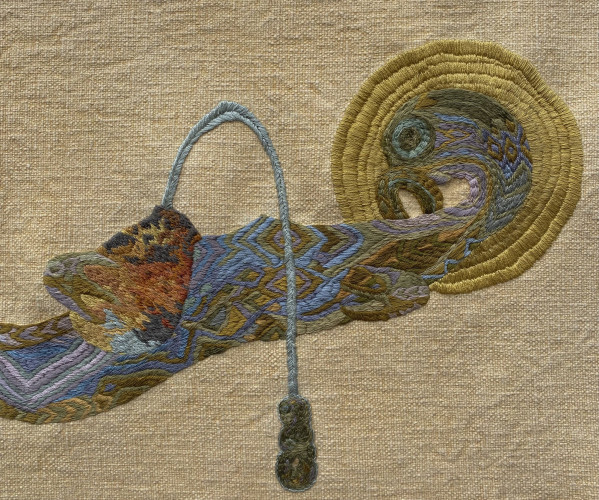
Georgina May Young Paringa – the incoming tide (detail) 2026. Handwoven linen, uku from Ōhiwa, cotton thread. Courtesy of the artist.
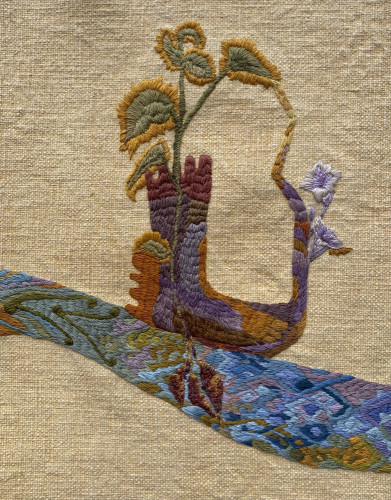
Georgina May Young Paringa – the incoming tide (detail) 2026. Handwoven linen, uku from Ōhiwa, cotton thread. Courtesy of the artist.
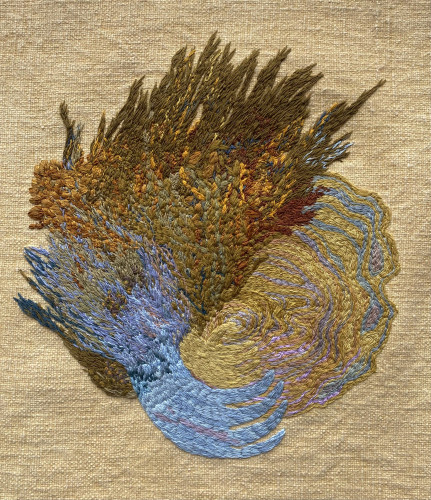
Georgina May Young Paringa – the incoming tide (detail) 2026. Handwoven linen, uku from Ōhiwa, cotton thread. Courtesy of the artist.
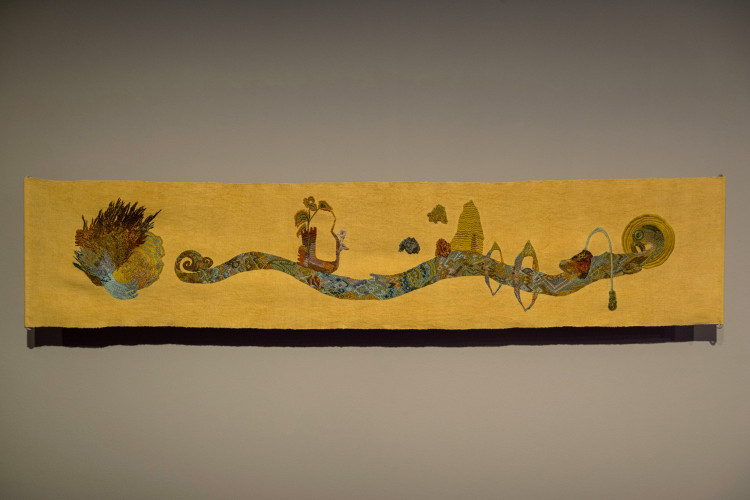
Georgina May Young Paringa – the incoming tide 2026. Handwoven linen, kerewhenua, cotton. Collection of the artist
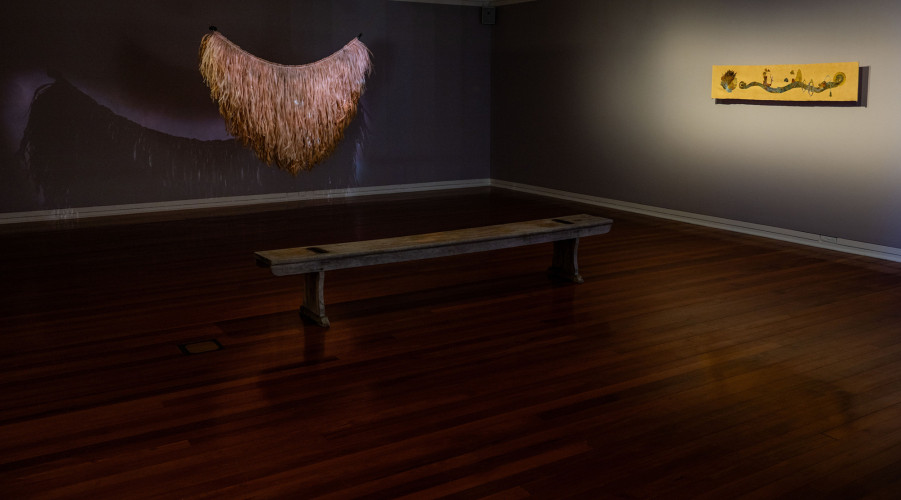
Georgina May Young I rongo i tō tohu – Heard your message 2026. Installation view.
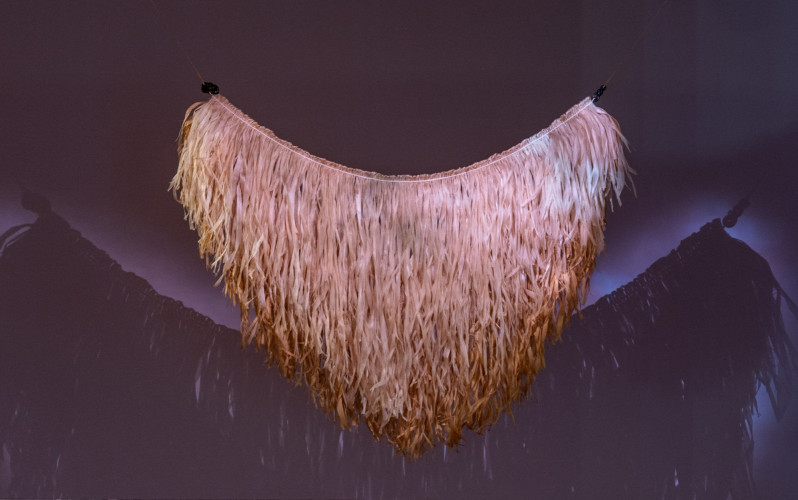
Georgina May Young Kārohirohi – meet you at the awa 2026. Houhere, muka, pounamu, video, sound. Collection of the artist
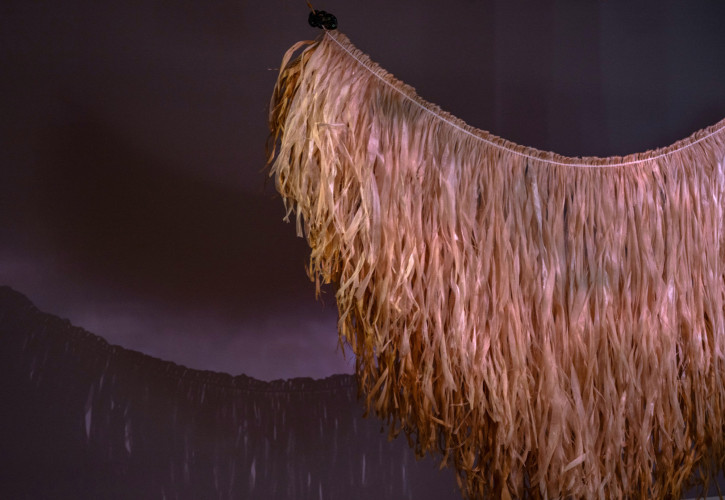
Georgina May Young Kārohirohi – meet you at the awa 2026 (detail). Houhere, muka, pounamu, video, sound. Collection of the artist
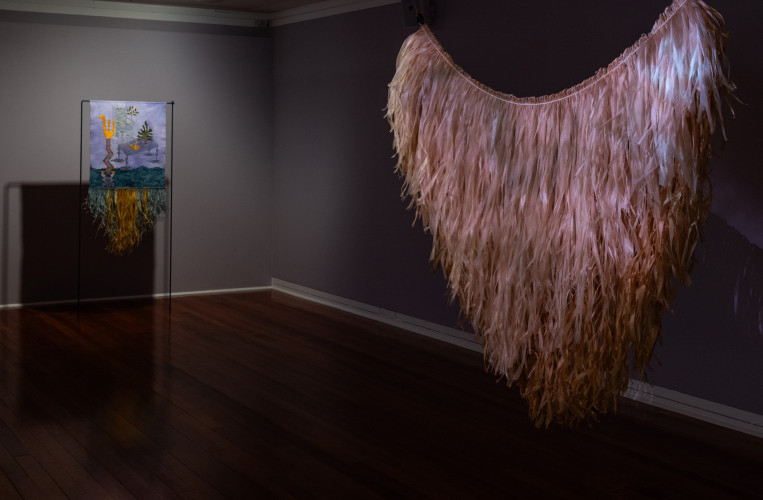
Georgina May Young left: Ara Manawa 2025. Muka embroidery, indigo, coreopsis, uku, mineral watercolour, gum arabic, houhere, linen, cotton. Courtesy of Lincoln University Te Whare Wānaka o Aoraki. right: Kārohirohi – meet you at the awa 2026. Houhere, muka, pounamu, video, sound. Collection of the artist
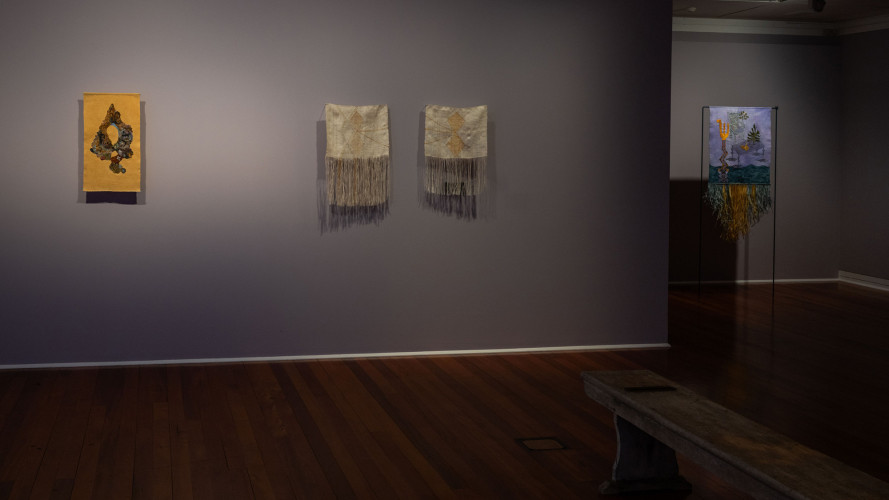
Georgina May Young I rongo i tō tohu – Heard your message 2026. Installation view.
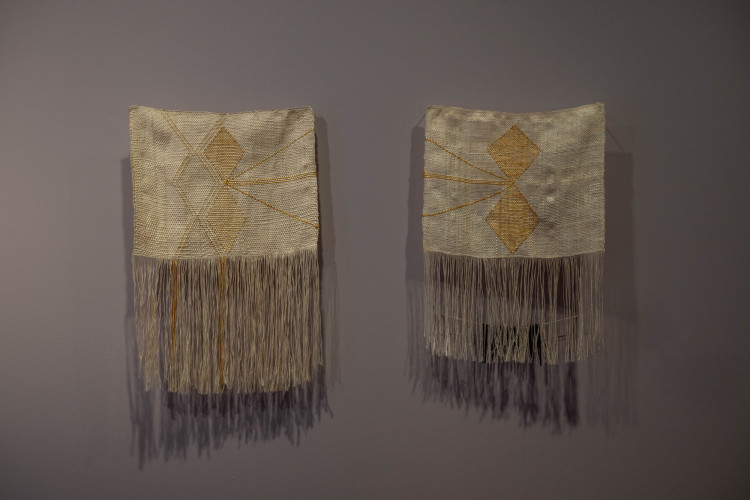
Georgina May Young Waharua 2026. Muka, mānono. Collection of the artist
Georgina May Young
I rongo i tō tohu – Heard your message
5 September 2026 - 22 November 2026
Every thread, fibre and stitch in this gallery is a gesture of love and of resistance. Hand-woven textiles have been dyed with whenua pigments to create the kaupapa, or base, for embroidered compositions. Works made from muka and houhere centre traditional materials valued for both strength and beauty, with Georgina May Young (Te Ūpokorehe, Te Whakatōhea, Irish, Scottish) bringing her own form and expression to mātauranga that has been passed down and cared for through generations. Across I rongo i tō tohu – Heard your message, Young employs materials and processes that depend on connections to flourish, including gathering mānono with her tama and the koha of pounamu collected and carved by her partner. Weaving, embroidery and raranga are all practices that rely on people sharing time, knowledge and experience in order to build a strong foundation. Young is interested in how these reciprocal processes create spaces for community, while resisting current social and economic systems that cultivate disconnection. She has described her approach as one of defiance that arrives softly, ‘A refusal of greed that takes without returning. A commitment to gentleness as a form of strength, to attentiveness as a form of care, to love as a practice of protection.’
Young was born in Ōpōtiki in the Eastern Bay of Plenty. This is her turangawaewae, the ancestral home of her Te Ūpokorehe and Whakatōhea tūpuna, and the place to which her Irish ancestors settled. In I rongo i tō tohu this whenua is literally embedded into works through uku, the clay used to dye some of Young’s handwoven textiles, which she collected from Ōhiwa, near Ōpōtiki, with her father. Her whakapapa and that of her family is threaded into the stitches of Paringa - the incoming tide (2026). This work unfolds as a whānau portrait that travels across time and place, stretching from the East Coast of Te Ika a Māui to Te Tai Poutini, the turangawaewae of her tau o te ate (darling), to finally land here on Te Tai o Āraiteuru and her home of Ōtepoti Dunedin. Waharua (2026) presents another exchange, the aho and whatu coming together into rhythms and tohu that echo the flow of conversations through time shared while busy hands are working.
I rongo i tō tohu celebrates the relationships between ecosystems, people and the seen and unseen forces that sustain life. Kārohirohi – meet you at the awa (2026) and Ara Manawa (2025) layer together taonga materials such as houhere, muka, and mānono, all of which require specialist understanding of cycles of growth and harvesting to prepare for weaving. Sound and moving image of glistening wai create an immersive encounter, gently breaking down the separation between the gallery and te taiao. As Young reflects, ‘working with my whānau, seasons, and the maramataka offers a different relationship to time; a slowing that resists the demands of haste, extraction, and endless productivity.’ Her deepening understanding brings appreciation for the capacities of these materials, which ranges from rongoā and medicinal uses, to practical bindings and lashings, to fine adornments. Young’s works in this exhibition attend to both the softness and strength of her materials, and whānau pūrākau. They are a reflection of her commitment to the taonga that have been passed to her, which she in-turn upholds for those who will follow.
______
Ko ia miro, ko ia weu, ko ia tuika ki tēnei ahurewa he whakaturi, ā, he tohu ātete anō hoki. Ko kā pueru ko whatua e te rika, ko tāwaihia ki kā kano o te whenua kia waihaka ai te kaupapa, te tūāpapa rānei o ēnei tāniko whakahiato. Ko kā mahika toi ko haka ki te muka, ki te houhere hoki ka whakapūhia kā papaka nō tuawhakarere e kaikākautia ana i tōhona kaha, i tōhona te rerehua, ā, mā Georgina May Young (Te Ūpokorehe, Te Whakatōhea, Irish, Scottish) tōhona ake haka, tōhona ake āhua e kawe atu hoki ki te mātauraka ko tukuna ihotia, ā, ko maimoa hoki i kā reaka. Ki te katoa o I rongo i tō tohu – Heard your message, ka whakamahia e Young kā papaka me kā tukaka e whirinaki ake ki te puāwaitaka o kā honoka, pērā i te kohitahi i te manono ki te taha o tāhana tama me kā kohika pounamu hai koha i whaoa e tāhana tāne. Ko te mahi raraka, te mahi tāniko me te whatu kākahu he mahi tuku iho nō te takata, ā, ko te wā, ko te mātauraka, ko te wheako hoki ko kā pou o te whare ako i ahu mai i te takata. E āta tirohia ana e Young te mahi ā ēnei tukaka ki te haka wāhi mō te hapori, ā, i te wā tou e ātete ana i kā pūnaha papori, i kā pūnaha ōhaka e tamata ana i te weheweheka tākata. Hai ko tāhana, ko te whakatuma e kāwari ana te tuku, ‘He whakakoreka o te touapo, e hutia ana e kore e whakatō ana. He whakaūka ki te hūmāria hai tohu o te marohi, ko te maimoa he tohu o te aroha, te aroha hai tohu o te tāwharautaka.
I whānau mai a Young ki Ōpōtiki ki te Uru o Te Moana-a-Toitehuatahi. Ko tōhona tūrakawaewae tēnei, te ūkaipō o ōhona tīpuna nō Te Ūpokorehe, nō te Whakatōhea, ā, ko te wāhi hoki i noho ai tōhona tīpuna nō Airani. I I rongo i tō tohu, nā te uku tūturu nei te tuitui o tēnei whenua ki ēnei mahika toi, ko te uku hoki ko whakamahia ki te tāwai i ētahi o kā pueru ko whatua e kā rikarika o Young, te uku i kohia tahitia e rāua ko tōhona matua i Ōhiwa, e tata nei ki Ōpōtiki. Ko whiria tōhona whakapapa, te whakapapa hoki o tōhona whānau ki kā tuika Paringa – the incoming tide (2026). Ka mārohatia te mahi nei hai whakaahua ā-whānau e hīkoi ana ki te wā, ki te wāhi hoki, e toro atu ana mai Te Tai Rawhiti o Te Ika-a-Māui ki Te Tai Poutini, te tūrakawaewae o te tau o tōhona ate, kia tae rawa mai ki Te Tai o Āraiteuru, ā, ki tōhona kāika ki Ōtepoti. Ka whakaatuhia atu e Waharua (2026) tētahi anō whakawhitika, te tuika tahitaka o te aho me te whatu ki kā manawataki, ki kā tohu, ki te pari kārakaraka o kā whakawhitiwhitika kōrero i te wā e mahi tou ana kā rika rehe.
Ka whakanuia e I rongo i tō tohu kā honoka ki waeka i kā pūnaha hauropi, i kā tākata, i kā tōpana ka kitea, kā tōpana e kore e kitea e toko atu ai te ao. Ka whakapapahia e Kārohirohi – meet you at the awa (2026), e Ara Manawa (2025) hoki kā taoka papaka pērā i te houhere, i te muka, i te mānono anō hoki, katoa katoa ka whirinaki rawa ki tētahi tohuka e mōhio ana ki kā mataora o te tipu, o te kohi, o te whakarite ki te whatu. Ko te oro, ko te whakaahua rere o te wai e kānapanapa ana ka waihaka mai i tētahi wheako rumaki, e āta whakahonohono i te weheka i waeka i te ahurewa me te taiao. Ko tā te huritao o Young, ‘ko taku mahika tahitaka ki taku whānau, ki kā kōpeka o te tau, ki te maramataka anō hoki ka tāpaehia he whanaukataka ki te hurika o te wā; he whakapōturihaka e papare ana i kā tohutohu o te whakatere, o te unuhaka, ā, o te whakaputaraka mutuka kore’. E whai whakamānawa ana tāhana ruku hōhonu ki te māramataka ki te kaha o ēnei paparaka e tātai atu ana mai i te rokoā me kā mahika rokoā, ki kā hereka, ki kā whirika whai take, ki kā whakanikoniko anō hoki. Ka aro atu te mahi a Young i tēnei whakaaturaka ki te waikōhia, ki te mārō hoki o āhana papaka, ki kā pūrākau o te whānau, ā, ki te hurika tao o te titikaha o tōhona ū ki te taoka i tukuna ihotia ki a ia, ā, ka pūpurihia hoki e ia, kia tukuna atu ai ki kā uri whakatipu.