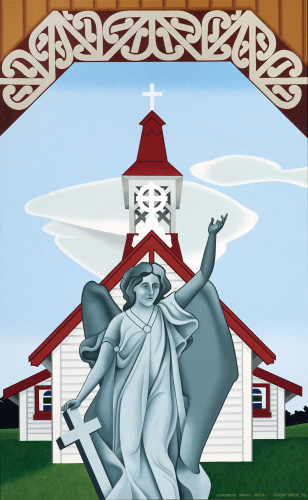
ROBIN WHITE Concrete Angel, Rata 1973 (detail). Oil on canvas. Collection of the Dunedin Public Art Gallery. Purchased 1973 with funds from the Dunedin Public Art Gallery Society.
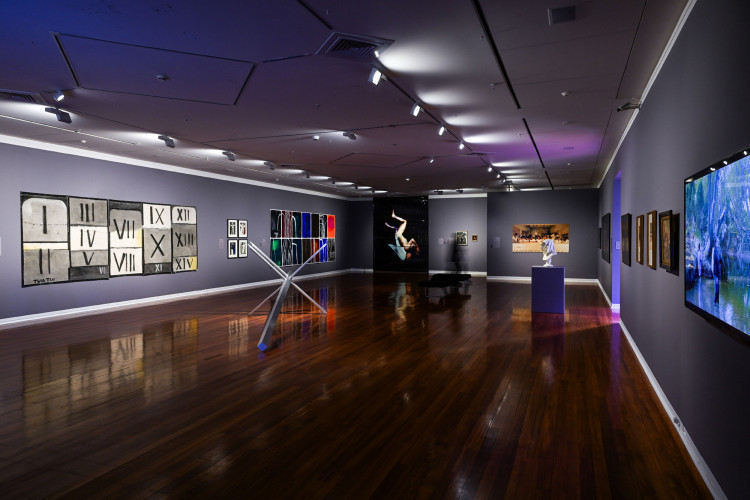
Prayers & Declarations: Exploring art and Christian faith 2025. Installation view, Dunedin Public Art Gallery.
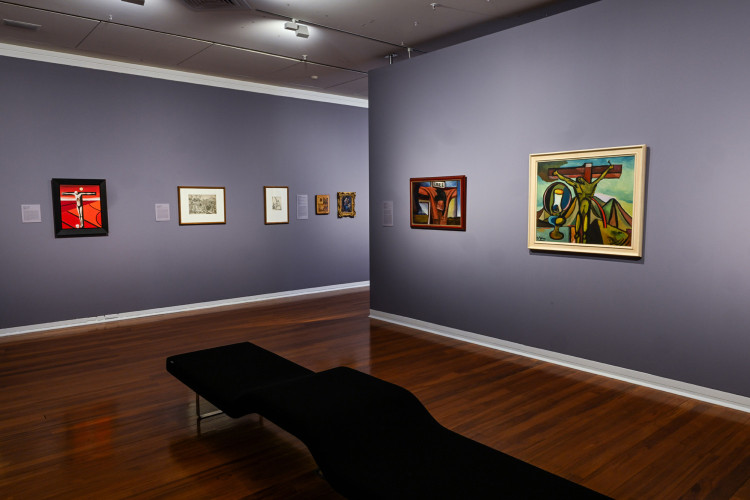
Prayers & Declarations: Exploring art and Christian faith 2025. Installation view, Dunedin Public Art Gallery.
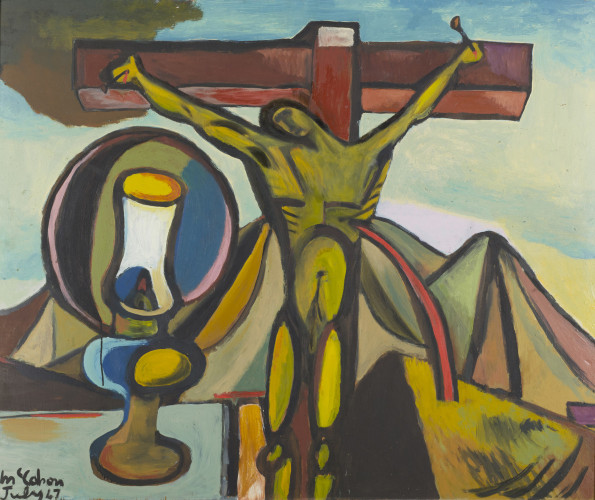
Colin McCahon Crucifixion with Lamp 1947. Oil on board. Given by Dr Charles Brasch, Dunedin, 1963, Hocken Collections Uare Taoka o Hākena, University of Otago. Courtesy of the Colin McCahon Trust.
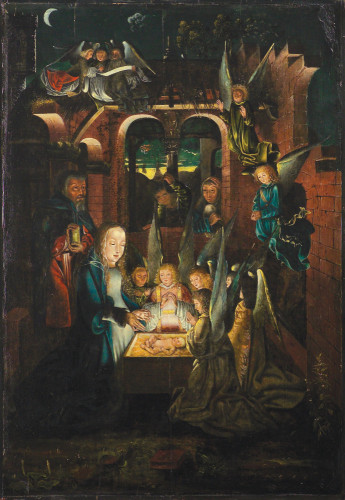
Bartholomäus Bruyn Birth of the Saviour early-mid 16th century. Oil on panel. Collection of Dunedin Public Art Gallery. Bequeathed 1967 by Mrs Doris Monheimer.
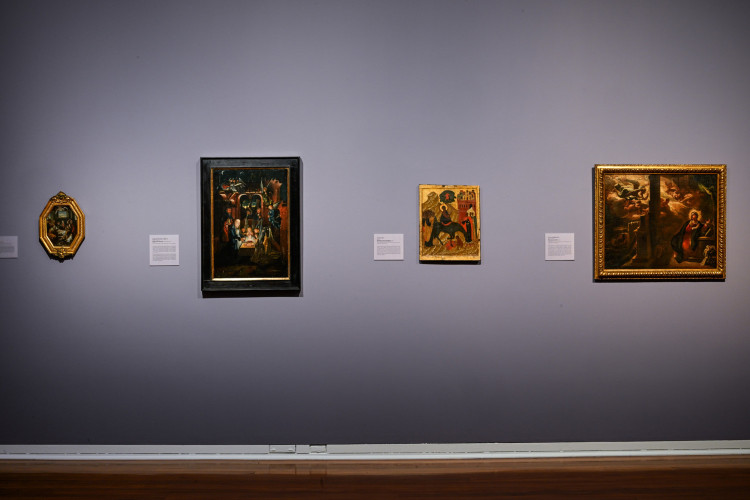
Prayers & Declarations: Exploring art and Christian faith 2025. Installation view, Dunedin Public Art Gallery.
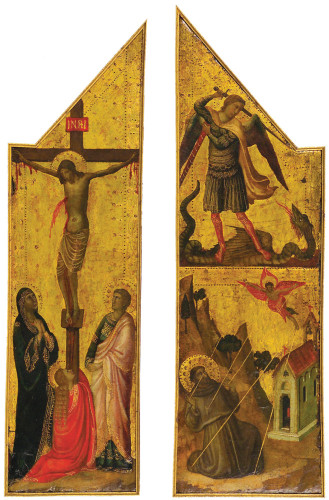
Jacopo del Casentino Two Wings from a Triptych c.1340-1350. Tempera and gold on wood. Collection of Dunedin Public Art Gallery. Gifted 1982 by Mary, Dora and Esmond de Beer through the National Art Collections Fund, London.
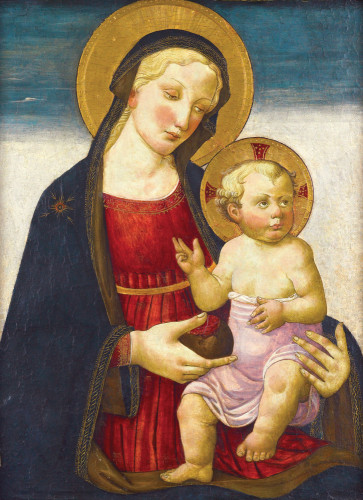
Master of San Miniato Madonna and Child with Pomegranate c.1470. Tempera and gold on panel. Collection of Dunedin Public Art Gallery. Gifted 1955 by Archdeacon F.H.D. Smythe.
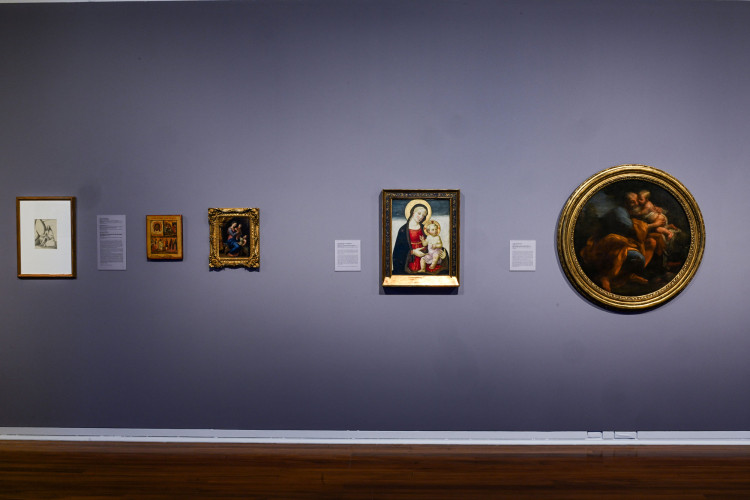
Prayers & Declarations: Exploring art and Christian faith 2025. Installation view, Dunedin Public Art Gallery.
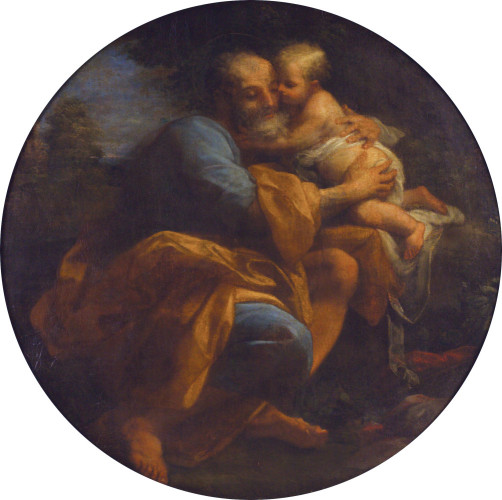
Carlo Maratta Saint Joseph and the Infant Christ c.1687. Oil on canvas. Collection of Dunedin Public Art Gallery. Bequeathed 1948 by Sir Henry Lindo Ferguson.
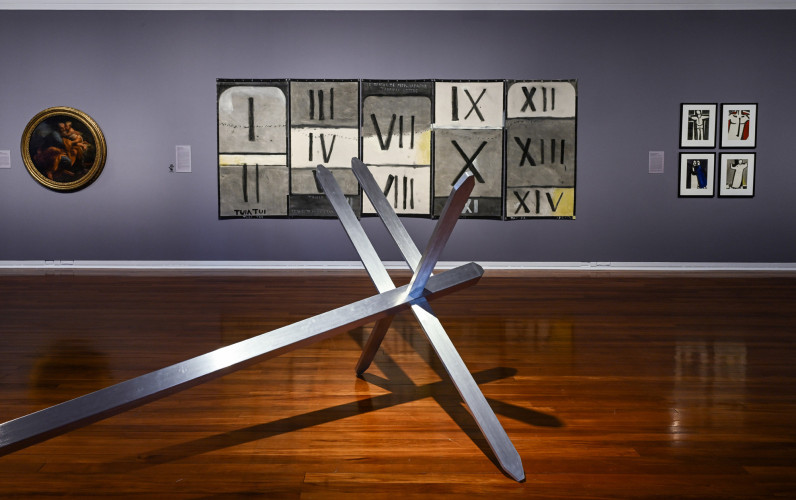
Prayers & Declarations: Exploring art and Christian faith 2025. Installation view, Dunedin Public Art Gallery.
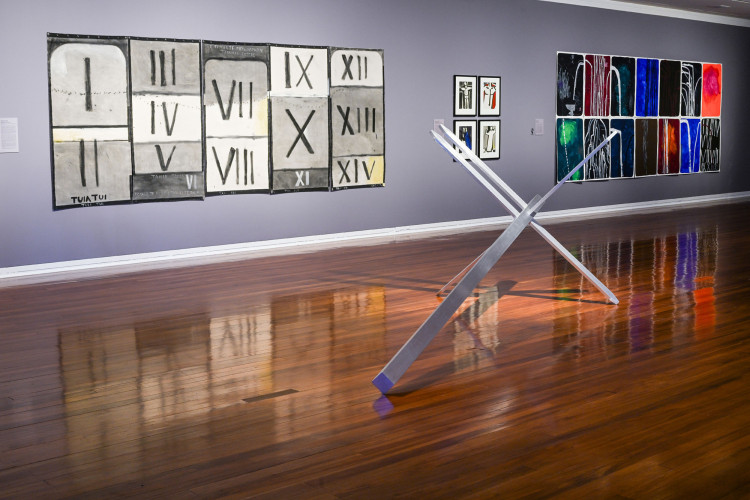
Prayers & Declarations: Exploring art and Christian faith 2025. Installation view, Dunedin Public Art Gallery.
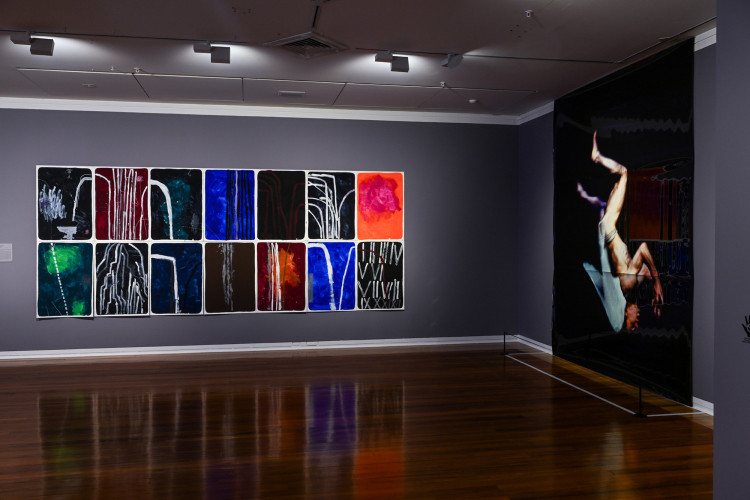
Prayers & Declarations: Exploring art and Christian faith 2025. Installation view, Dunedin Public Art Gallery.
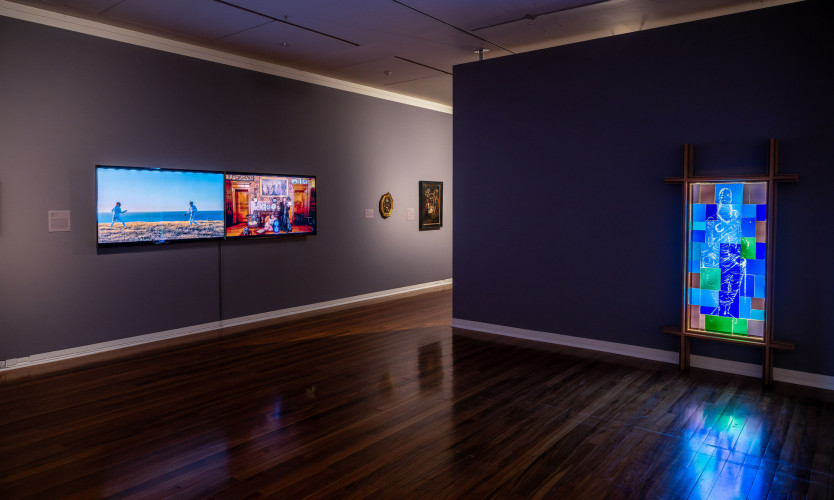
Prayers & Declarations: Exploring art and Christian faith 2025. Installation view, Dunedin Public Art Gallery.
Prayers & Declarations
Exploring art and Christian faith
13 December 2025 - 17 May 2026
The histories of church and art have long been intertwined. This exhibition looks across the collections of Dunedin Public Art Gallery and Uare Taoka o Hākena Hocken Collections to consider how stories, themes and iconography relating to Christianity and faith have appeared in the works of artists across time. Prayers & Declarations celebrates the rich historic collections of the Dunedin Public Art Gallery, while inviting audiences to consider how contemporary artists continue to explore Christian subjects and symbolism in a wide range of ways.
Prayers & Declarations explores the intersections between artists and Christian faith that have existed over centuries. Works from the late Middle Ages and Renaissance give a glimpse into a time when artists’ works were a primary means of recording and widely sharing the teachings of the Church. The importance of these stories was amplified by use of precious resources, often including gold and ultramarine pigment, ground by hand from prized lapis lazuli stone. In the Dunedin Public Art Gallery collection, Jacopo del Casentino’s Two wings from a triptych, dating from the mid-14th century, offers an example of how the story of the crucifixion of Jesus could have been present in a private home around 100 years prior to the first printed Bible.
Christian art of the Renaissance was shaped around symbolism and devotion. Colour carried direct meaning, for example ultramarine blue, often connected to the Virgin Mary, symbolised purity and holiness, with gold denoting the Divine Light. Iconography formed around Christian narratives, for example the Madonna and Child and the Crucifixion, which appear in art across centuries. Despite their starkly different times and contexts, both Colin McCahon’s Crucifixion with lamp (1947) and The Deposition (2002) by John Reynolds draw directly upon this iconography, while other artworks in this exhibition, such as McCahon’s The Song of the Shining Cuckoo (1974) and Joanna Margaret Paul’s Working drawings for Stations of the Cross (c.1971) reflect the enduring connection between Christian ritual and art.
In contrast, works such as Christine Webster’s The Falling Angel (1997), Robin White’s Concrete Angel, Rata (1973) and Crucifixion (1997-2007) by Jeffrey Harris highlight the ways in which artists can recontextualise religious forms, whether for dramatic effect, to shift meaning and context, or to explore secular themes including motherhood, grief, adversity, and the body. Theatrical in content and scale, Webster’s work explores notions of life, death, and transcendence, while Harris harnesses the power and theatricality of religious iconography to reflect his own personal struggles and experiences. In Concrete Angel, Rata, White presents a repositioning of church, memorial, and viewer within the landscape, informed by her experiences of a rural town in Aotearoa New Zealand.
Artists have also used Christian symbolism, narratives, and icons to challenge and critique the power structures and role of the Church across time. In Prayers & Declarations, three contemporary artists of diverse backgrounds redeploy the iconography of the Last Supper as a provocation. In the case of Mary Beth Edelson and Margaret Dawson, the form is used as a feminist critique. Greg Semu’s Auto-portrait with Twelve Disciples (2010/11) uses the Last Supper to address the role of Christianity within colonisation, and the complexities and tensions of this legacy within Pacific and Indigenous communities.